Mendocino SBDC

Chickfly

“I got very specific help from West Center and I now know many people there who I can contact for specific things. It’s really nice to know that when I need a hand, I know who to call and where to get help.”
All Client Stories

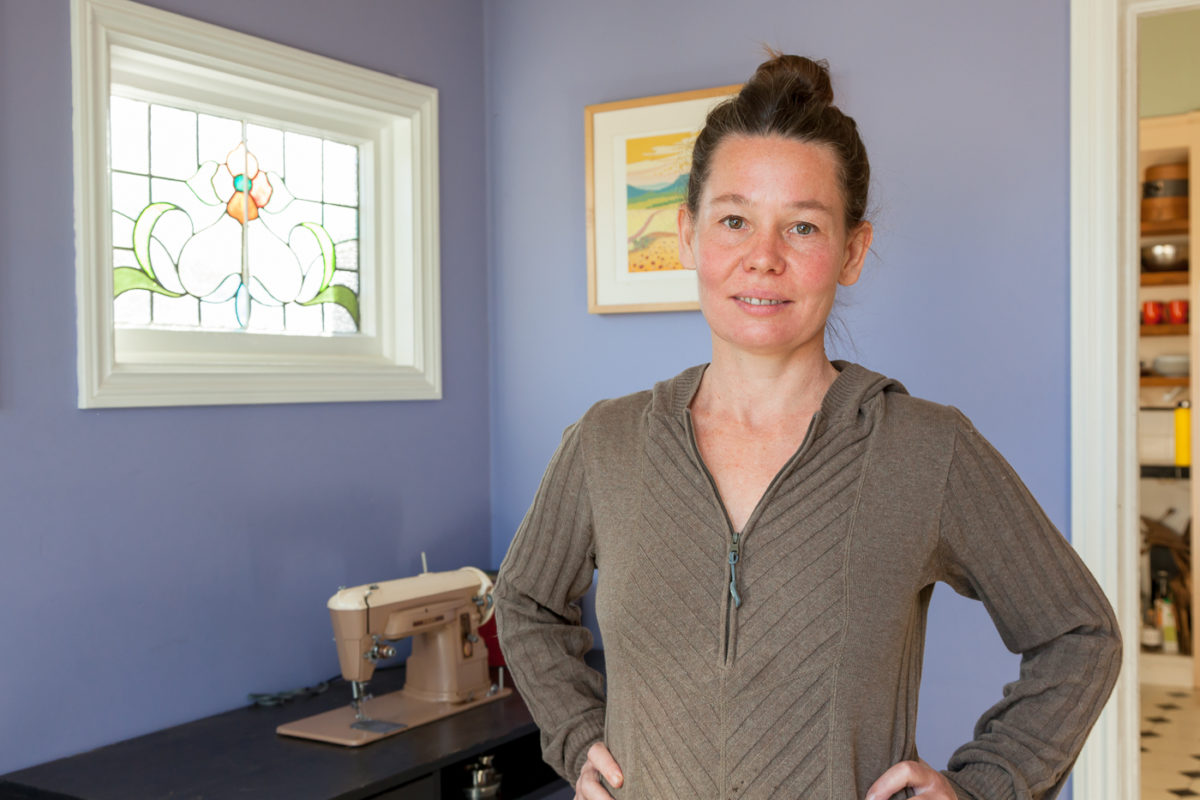
Anna had been so focused on doing everything herself, she turned to Mendo-Lake SBDC to find another perspective.

Continuing our chats with some of West Center’s SBDC clients, we met up with Anna Birkás to hear about her latest venture with the launch of her business, Chickfly!

WC: Tell our readers who you are and what your business is.
AB: I’m Anna Birkás and I started Chickfly. My company makes pants with a fly that works for women. I developed this unique patented design to help women and others go to the bathroom discreetly and with ease. 

Which Canadian Banks Support eCheck Deposits: A Casimatic Overview

Electronic check deposits have become an increasingly common payment method across Canadian online platforms, including gaming and entertainment services. Unlike credit cards or e-wallets, eChecks operate through the Automated Clearing House (ACH) network — or its Canadian equivalent, the Automated Funds Transfer (AFT) system managed by Payments Canada — allowing funds to move directly between bank accounts without requiring physical paper. For players using platforms like Casimatic, understanding which financial institutions actually support this deposit method is essential before attempting a transaction, since not every Canadian bank has configured its systems to allow third-party eCheck processing for online accounts.

How eCheck Processing Works Within the Canadian Banking System

Canada’s interbank payment infrastructure is governed by Payments Canada, the organization responsible for clearing and settlement systems across the country. The AFT system, which underpins most eCheck-style transactions, processes debit transfers between participating financial institutions using account and routing numbers. When a user initiates an eCheck deposit on a platform, the processor submits a debit request to the originating bank. The bank then has a window — typically two to five business days — to honor or reject the transaction before funds are confirmed on the receiving end.

This process differs meaningfully from Interac e-Transfer, which is a real-time push payment. eChecks are pull payments, meaning the merchant or platform initiates the transaction rather than the customer sending funds manually. This distinction matters because Canadian banks apply different risk and compliance filters to pull-based transactions. Some institutions flag or block these requests outright if the merchant category code (MCC) associated with the recipient falls into categories considered high-risk under the bank’s internal policies — a classification that online entertainment platforms sometimes receive.

The technical infrastructure also requires that the originating bank support ACH/AFT debit origination for personal accounts. While all major Schedule I banks in Canada are participants in the AFT system, their retail policies on allowing third-party debit pulls vary considerably. This is why two customers at different banks may have entirely different experiences when attempting the same eCheck deposit.

Which Banks Are Known to Support eCheck Deposits for Online Platforms

Among Canada’s major financial institutions, the Royal Bank of Canada (RBC), Toronto-Dominion Bank (TD), Bank of Nova Scotia (Scotiabank), Bank of Montreal (BMO), and Canadian Imperial Bank of Commerce (CIBC) — collectively known as the Big Five — all participate in the AFT system at the infrastructure level. However, participation in the system does not automatically translate into permitting eCheck transactions for all account types or merchant categories. As of the early 2020s, TD and Scotiabank have generally demonstrated more permissive retail policies for third-party debit pull transactions, while CIBC has historically applied stricter filters that can result in declined eCheck attempts for certain online platforms.

Credit unions and smaller Schedule II banks present a more fragmented picture. Institutions like Desjardins in Quebec and Vancity in British Columbia do support AFT debit transactions, but their processing timelines and approval rates can differ from the Big Five. Some credit unions route their AFT transactions through central clearing agents, which adds an additional layer of policy review. For anyone researching what banks support eCheck deposits in Canada, it is worth noting that the answer is not static — bank policies are updated periodically in response to regulatory guidance, fraud patterns, and internal risk assessments, meaning a bank that worked smoothly for eCheck deposits in 2022 may have adjusted its rules by 2024.

National Bank of Canada, primarily serving Quebec and parts of Ontario, has shown moderate compatibility with eCheck processing, though users have reported occasional holds or verification requests on first-time transactions. EQ Bank, a digital-only institution, operates differently — its deposit accounts function through a partner institution and may not support third-party AFT debit pulls at all, which is a common limitation among digital-first banks that rely on banking-as-a-service infrastructure rather than direct AFT membership.

Casimatic and eCheck: Practical Considerations for Canadian Users

Casimatic accepts eCheck deposits as part of its payment portfolio for Canadian users, positioning the method as an alternative to card payments for those who prefer direct bank transfers. The platform works with third-party payment processors who handle the AFT debit request on the backend, meaning the user provides their transit number, institution number, and account number — the same information printed on a Canadian cheque — rather than interacting with their bank directly during the transaction.

One practical implication of this structure is that Casimatic’s ability to process an eCheck depends not only on the user’s bank but also on the processor’s banking relationships and its own AFT originator status. Processors operating as Regulated Payment Service Providers (PSPs) under the Retail Payment Activities Act (RPAA), which came into force in Canada in 2024, are subject to registration and operational requirements administered by the Bank of Canada. This regulatory layer adds a degree of accountability to the payment chain that was previously absent, and it has prompted several processors to tighten their bank partner agreements and improve transaction success rates.

Users at TD and Scotiabank tend to report the most consistent eCheck deposit experiences on platforms like Casimatic, while those banking with CIBC or certain credit unions occasionally encounter declines on the first attempt. A common workaround is to ensure the bank account has been active for at least 90 days and carries a positive balance history, as newer accounts are more frequently flagged by automated fraud detection systems during pull-payment processing. Casimatic’s support documentation also recommends that users confirm their bank does not have a blanket block on online gaming-related merchant categories before initiating an eCheck deposit.

Regulatory Context and Future Developments

Canada’s approach to regulating digital payments has evolved substantially since the 2021 amendments to the Payment Clearing and Settlement Act and the subsequent introduction of the RPAA framework. These changes brought non-bank payment processors into a formal oversight structure for the first time, requiring them to register with the Bank of Canada and maintain safeguarding arrangements for customer funds. For eCheck specifically, this means the processors facilitating transactions on platforms like Casimatic are now operating under documented compliance obligations rather than purely contractual arrangements with their banking partners.

Financial institutions have responded to this regulatory shift in different ways. Some banks have used the transition period to formalize their policies on third-party debit origination, producing clearer internal guidelines on which merchant categories are permitted. Others have invested in enhanced transaction monitoring systems that can distinguish between legitimate eCheck deposits and fraudulent debit pulls more accurately, which has had the side effect of reducing false-positive declines for compliant platforms.

Payments Canada has also been advancing its modernization agenda, including the development of a new core clearing system intended to replace legacy AFT infrastructure. While the timeline for full deployment has shifted several times since the project was announced, the eventual upgrade is expected to support faster settlement windows and improved data standards — both of which would benefit eCheck processing by reducing the uncertainty that currently exists during the two-to-five-day clearing period. For users and platforms alike, this means the eCheck landscape in Canada is likely to become more standardized and predictable over the next several years, even if the current experience remains somewhat bank-dependent.

Understanding the intersection of bank policy, payment processor infrastructure, and evolving regulation is the most reliable way to navigate eCheck deposits in Canada. The compatibility of a given bank is not simply a matter of whether it is large or well-known — it reflects specific internal decisions about risk tolerance, merchant category treatment, and AFT participation terms. For Canadian users of platforms like Casimatic, verifying compatibility with their specific institution before initiating a deposit remains the most practical step, particularly as regulatory changes continue to reshape how banks and processors interact within the country’s payment ecosystem.

WC: Why do we need pants with a fly for women?
AB: As a hydrologist, ecologist and general contractor, I work outdoors all the time on crews with men and mixed company. I began to recognize that there was an inherent inequality issue—from women who are limited by bathroom lines, privacy on construction jobs, removal of equipment such as safety harnesses, lost time on marathons—to people with disabilities who want to be able to manoever on to a toilet and open their fly without taking their pants down to people who are gender-fluid and trans. 

WC: What first sparked this idea? What was the “aha!” moment for you?
AB: Well, I’ve always been a bit macho and competitive with men so it’s natural for me to want to do what men can do. Some of that comes from being a general contractor and doing construction work. What sparked the idea was when my son was an infant and I was doing elimination communication with him. In Asia, and specifically in China, babies often wear split pants so I began playing with that design and made some pants for my son. But it wasn’t till about four years later that I thought, if they work for kids, why not for women? So I went to a thrift store and bought a really stretchy skirt and made my first pair. My first attempt started with two individual legs that stretched across the opposing hip, creating a wonderful place in the middle that pulled apart: Chickfly was born! I pretty much knew I was going to start a business as soon I made that first pair of pants. They were amazing and they worked really well!

WC: Are you naturally a seamstress?
AB: I don’t really consider myself a seamstress as I don’t know all the rules. I’m more of a designer – I do water design and construction in my other work – so I can see things 3-D and imagine the design. I did learn to sew when I was very young. When I was a toddler, my mom taught me how to use a needle. I then graduated to our old treadle machine and since then have always sewed throughout my life. 

WC: You’ve designed basic yoga pants; what’s next?
AB: You’re right. I’ve made the easiest pair of pants – the stretch yoga pants – but I have ideas about how I could make cargo pants, pants for the military, and more complex pants. But it’s really hard to figure out. You need to have the stretchy fabric in the crotch but very durable fabric for the legs and everywhere else. I’ve made one draft of them but to me, they look funny and aren’t the aesthetic I’m looking for. I fall asleep at night thinking about how to design things!

WC: Tell us about some of the issues you faced when starting Chickfly.
AB: I first started working with West Center and the Mendo-Lake SBDC several years ago with my other business, Village EcoSystems and it was really helpful. I then came back to West Center more recently after I’d been preparing for many years to launch Chickfly. I began working with their advisors in earnest and got help with things like writing a business plan, learning to use social media and create marketing materials, how to position myself online ahead of my Kickstarter launch to make sure I had the right branding, the right attention, and to focus on the right things before I went live with that launch. 

WC: Can you tell us what it’s like to have West Center to reach out to?
AB: I find it very comforting and the Mendo-Lake SBDC has been great. It’s really helpful because having worked with them so much over the years, I’ve found out how they can be most helpful to me. A lot of times it’s just nice to have someone there to tell you what to do. I’ve made a lot of big decisions on my own during this process and in some ways that’s exhausting and it also feels inefficient. I’m at a point in the business where I need to focus on only the things that really matter and I need to do those really well. So the Mendo-Lake SBDC has been really helpful in guiding me in that regard.

WC: What role did West Center’s advisors play in helping you?
AB: I had been so focused on doing everything myself, I realized there comes a time when you need some other feedback. I was trying to be everything: the seamstress, the financial person, the designer, the producer of marketing materials, videos and social media. It was a giant learning curve and I learned a lot. But when it came down to getting ready to launch, I didn’t have a budget to hire people at professional rates for the specialized skills I needed assistance with. I got very specific help from West Center and I now know many people there who I can contact for specific things. It’s really nice to know that when I need a hand, I know who to call and where to get help. A big part of my success is being able to get expert advice when it’s needed. For example, since I was interested in specifically targeting outdoor apparel and gear markets, West Center was able to connect me with someone in the Bay Area with that type of experience. 

WC: You’re starting a company that has great potential. How will your company’s growth maybe benefit the community and Mendocino County in general?
AB: If the company stays local, then there’s the potential to hire people and provide jobs. I think that’s just so important for our rural county. 

WC: Lastly, the $64,000 question: How much have you raised on Kickstarter so far?
AB: As of today (February 18), we have raised $108,000… more than four times my original goal of $25,000! It makes me feel good but it’s a little nerve-wracking! It makes me feel like I should be doing more.